I reviewed the Hill People Gear Ute on ITS Tactical.
It will come as no suprise after my Tarahumara and Kit Bag reviews that my review of the Ute is positive.
You are currently viewing all posts tagged with review.
It will come as no suprise after my Tarahumara and Kit Bag reviews that my review of the Ute is positive.
Below the Maxpedition Keyper I connect a quick-release fob. This adds enough length to the setup that the keys can be silenced in my pocket, but still securely attached to my belt via the Keyper. The side-release buckle provides easy, one-handed access. The fob attaches to the Keyper via a normal split ring.
For most of the 8 years that I’ve used the fob, I’ve attached the keys to it via another split ring. I tried a cable ring from CountyComm for some time, but it was too large and the closure unscrewed itself frequently. Later, when the FREEKey came out, I gave it a shot. It worked well enough but I found that it offered no practical advantage over a normal split ring. Finally, last March I learned about the Flex O Loc Key Ring from Brian Green. I bought a pack of them and have been using one on my keychain ever since. I find that they’re perfect: the right size, easy to open, and secure when closed.
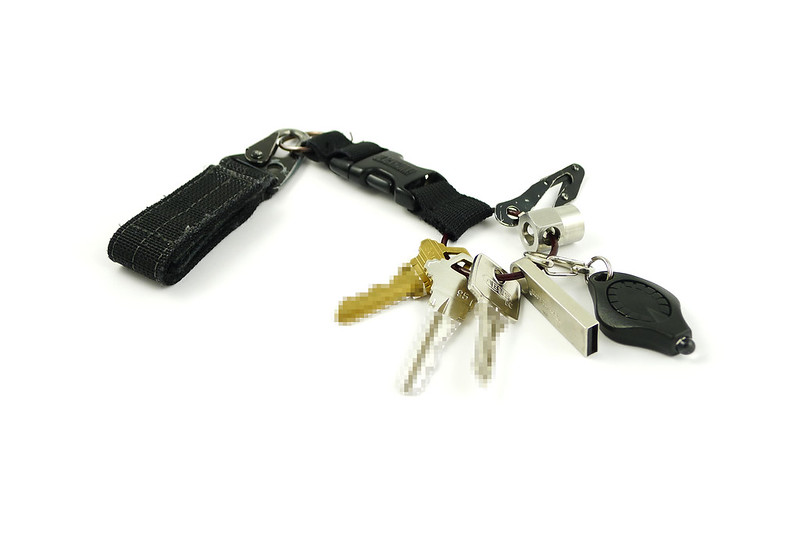
On the keychain itself I carry three keys: an apartment key, a work key and a bike lock key. Next to the keys is a Kingston DataTraveler SE9 (16GB). I find that the DataTravelers are a good combination of performance, durability and price. I consider this my “dirty” stick: it holds no personal information and is formatted with FAT32. I’ll stick it in pretty much anything. It used to hold Liberté Linux, but unfortunately that project seems largely abandoned now. Next to the USB stick is a Photon Freedom Micro LED light with a green beam. I’ve lost count of how many years I’ve had this. It doesn’t produce a significant beam, but it frequently comes in handy. I like to know that I always have a light source attached to me. Next on the ring is the pit for my Pitlocks. This is a specially keyed nut that is needed to remove the Pitlock skewers on my bike. It increases the difficulty of stealing a wheel. The final item is a SERE V Cutter. I consider this more of a toy than a tool. It does cut cord very well, but so does a knife. I wouldn’t buy it again, but as long as I have it I figure I might as well use it, and it is small and light enough that I can put it on my keychain and forget that it’s there.
The ESEE Candiru is another nice knife that suffers from a terrible sheath.
In fact, it is a great little knife. Unfortunately the only sheath that the Candiru comes with is a simple Cordura pouch. I threw this away immediately upon receiving the knife and replaced it with a horizontal belt sheath from Dark Star Gear. The Dark Star Gear sheath first came to my attention on pistol-forum.com. At the time I hadn’t purchased the Candriu, but horizontal carry of a small fixed blade at about 11:00 on the belt impressed me as a great idea. I knew I wanted to give it a shot.

I considered ordering the sheath for my Izula, which is the knife I usually carry when I want a fixed blade, but I was concerned that it would be a little too big to conceal horizontally on my waist1. Instead I decided to purchase the ESEE Candiru, which Brian Green had raved about last year, just for this carry method. (I actually ordered the sheath before I ordered the knife.)
I’m extremely pleased with both purchases. The Candiru is not quite as general-purpose as the larger Izula, but it performs all the functions that I require of an urban EDC blade, and provides yet another option for an EDC fixed blade. This is something that I have come to prefer over a folder since I purchased the Izula about 4 years ago. The Dark Star Gear sheath allows me to carry it comfortable and conceal it with nothing more than a t-shirt, while still providing for a quick draw. The sheath has also exposed me to the idea of carrying at 11:00, which is a very nice piece of real-estate on the belt that I have previously overlooked.
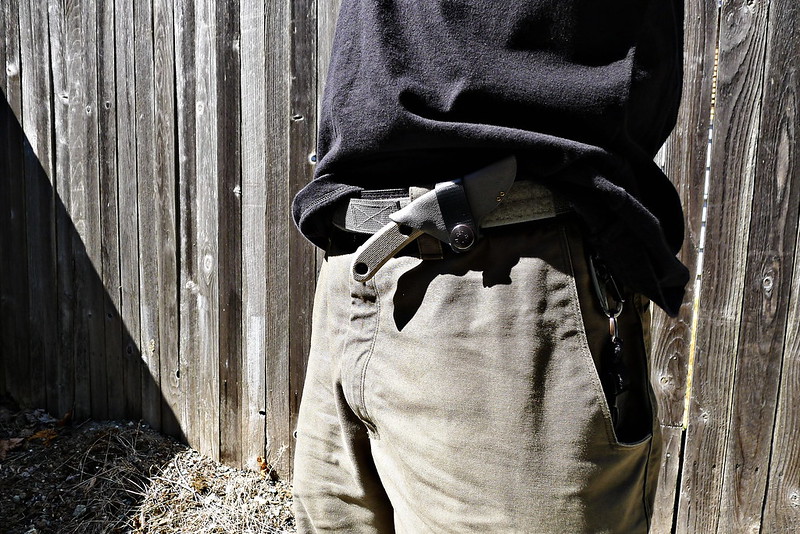
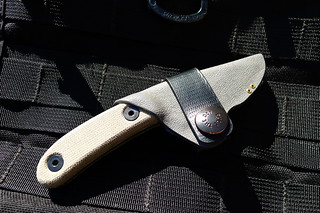
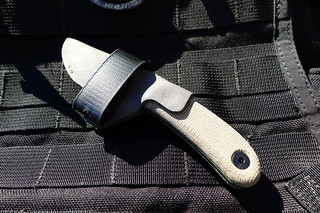
I have carried the Candiru in the Dark Star Gear sheath as my primary knife for about 2 months now. Up until a few days ago the Candiru’s handle had been cord wrapped2. I just recently purchased and installed the optional Micarta slabs. The Candiru does suffer from a small handle – a necessary evil for a knife this size. It can use all the extra bulk it can get. My initial impressions of the Micarta slabs are that they greatly improve the feel of the knife in the hand without any negative impact on the ability to easily conceal the knife in the Dark Star Gear sheath.
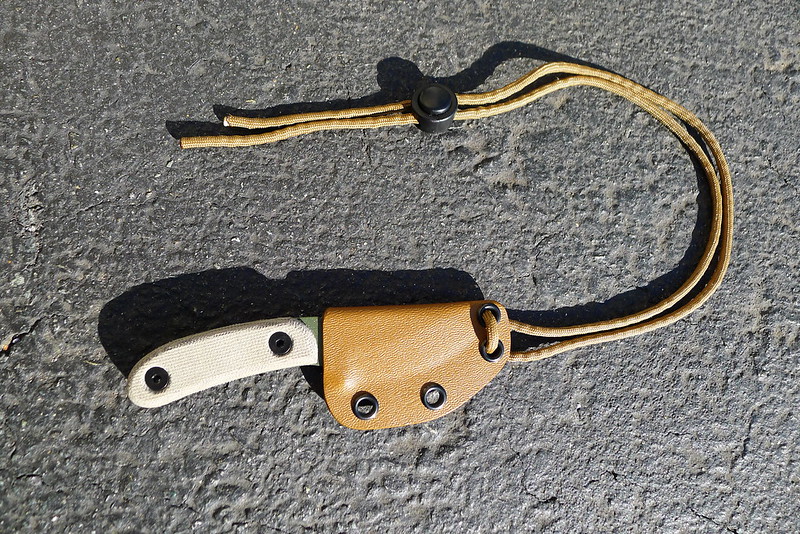
For a second carry option I also purchased a Kydex neck sheath for the Candiru. This is the sheath that the Candiru should ship with. The size of the knife makes it a great option for those who find the Izula a bit too large for comfortable carry around the neck3, but still want something a bit more functional than a tiny CRKT RSK Mk5 or Nemesis Hellion. I carry the knife around my neck when I run, since for that activity I’m not usually wearing a belt appropriate for the Dark Star Gear sheath. Adding the Micarta slabs does make the Candiru a bit heavier and bulkier around the neck. If you intend to use the Candiru primarily as a neck knife, I would stick with a cord wrap on the handles.
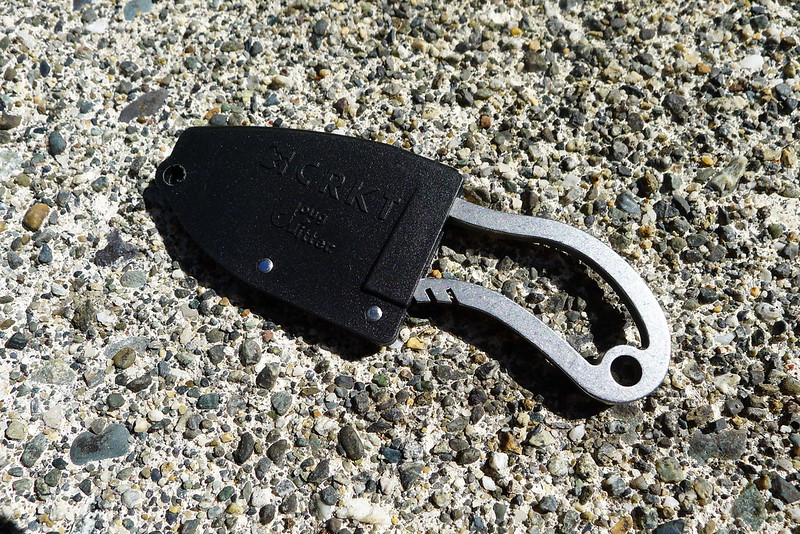
The CRKT RSK Mk5 is a nice knife cursed by a terrible sheath.
I’ve been EDCing the knife since my Nemesis Hellion was lost last November. Unfortunately, the “glass filled nylon” sheath that the RSK Mk5 ships with is a poor design. The grommet in the tip is too small to accept a piece of paracord. This was done to keep the overall size of the sheathed knife small enough to fit inside an Altoids tin. I have never understood the obsession with the Altoids tin survival kit. I prefer to carry a knife about this size around my neck.
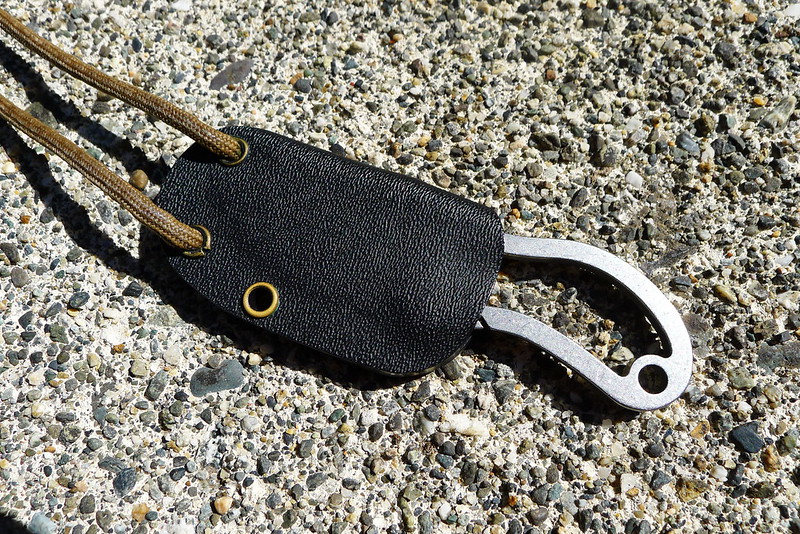
Some time ago I purchased a new sheath for my RAT Izula from a fellow on eBay who goes by lemonwoodgallery. I was pleased with that purchase, so as soon as I bought the RSK Mk5 I shipped it to him to make me a custom kydex sheath. It’s nothing fancy – just your standard taco style sheath with two grommets at the top for a piece of paracord and one on the side for retention. This is the same design as the sheath for the Nemesis Hellion, which served me well for 6 years. The new sheath has held the RSK Mk5 around my neck for about 8 months now. It’s a much appreciated upgrade.
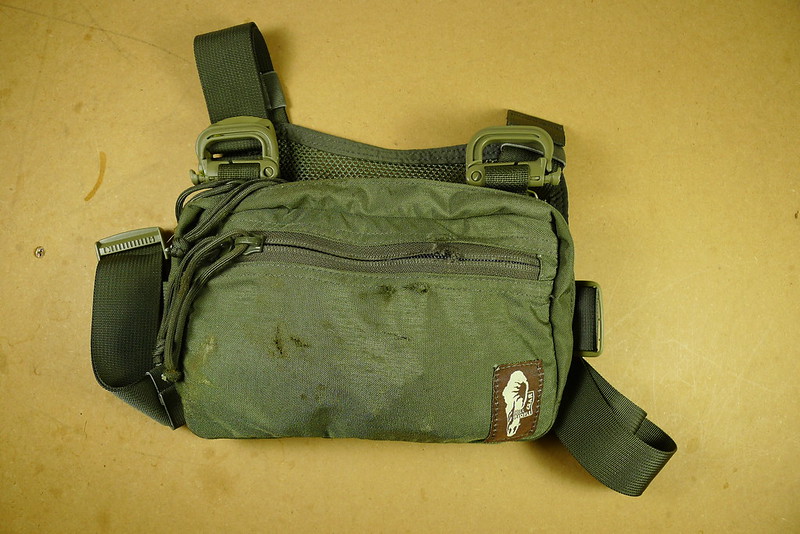
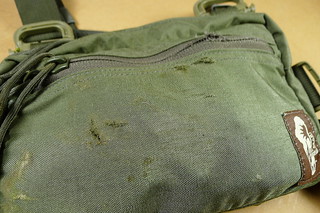
I crashed my bike this morning. I landed on my chest and skidded a few feet on the concrete. Luckily I was wearing my Hill People Gear Snubby Kit Bag. The front of the Kit Bag was torn. It saved my chest (and my nice merino shirt) from the same fate. Thanks HPG!
The Defeet Wool Duragloves also handed themselves admirably. The right-hand glove is fine. The left-hand glove has a hole in the palm. I expect this low amount of damage is due to the 40% Cordura composition. I would not expect 100% wool gloves to hold up as well.

The paint is chipped. There is a little rust on the gate. The hook has been reshaped by almost a decade of rubbing by a split ring. It still works as good as the day I bought it.
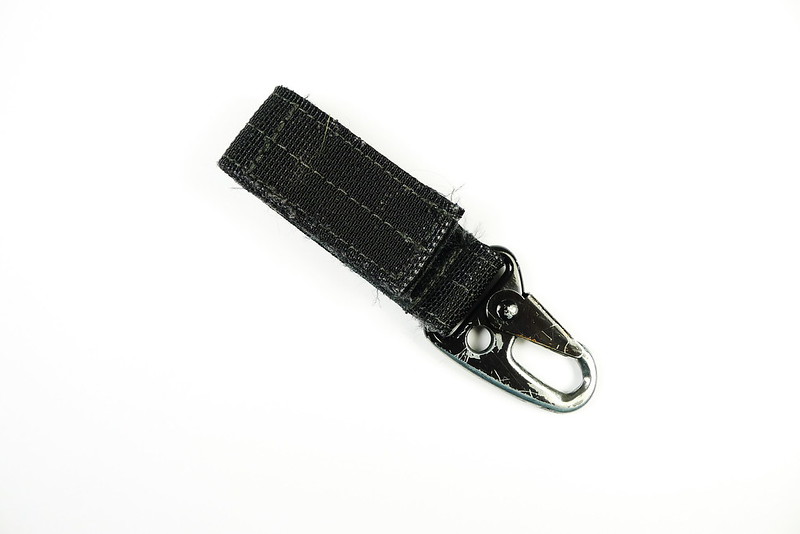
If you need to hang something off your belt, seriously consider the Maxpedition Keyper.
As with the Kit Bag, my opinion of the Hill People Gear Tarahumara is high. It stands strong on its own, and has proved a versatile addition to a pack system.

I first heard of the Defeet Duragloves when Andrew Skurka included the wool gloves in his gear list for the Alaska-Yukon Expedition back in 2010. I was impressed that he chose to carry only one pair of seemingly thin gloves for all but the coldest portions of the trip. At the time I had an old pair of Outdoor Research PL 400 Gloves that I was happy with for winter backcountry use, but I kept the wool Duragloves in the back of my head as a possible replacement when the time came.
I still have Outdoor Research PL 400 Gloves and I am still pleased with the warmth they provide for cold weather hiking, but I’ve never been satisfied with them on the bike. Even in cold temperatures, I always manage to work up a sweat when cranking on the pedals. The PL 400 gloves are just too warm for that application. This past October I decided to purchase a pair of the wool Duragloves to see if they would be better suited to fill that niche.
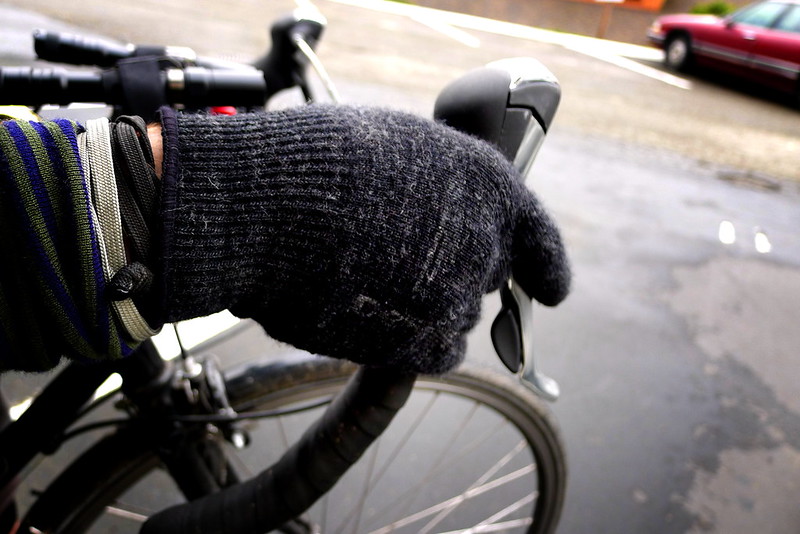
The wool Duragloves are a blend of 40% merino, 40% Cordura, and 20% Lycra. Their thickness is that of your typical liner glove. The palm and fingers are covered with rubber grippy things. My medium sized pair weigh exactly 2 oz.
The gloves are designed specifically to address the problem that I was having. They are meant as a cool weather cycling glove that don’t cause your hands to overheat and sweat on hard hill climbs, but still keep you warm on the descent.
Duragloves are not made to climb Mt. Everest. They are made to climb mountains at a hard pace, descend the other side, and do it over and over until your ride is done. Thin enough to ride at your maximum effort and still give you dexterity to fiddle around in your jersey for food. Thick enough to keep frostbite off your fingers at 50mph down alps still laden with snow.
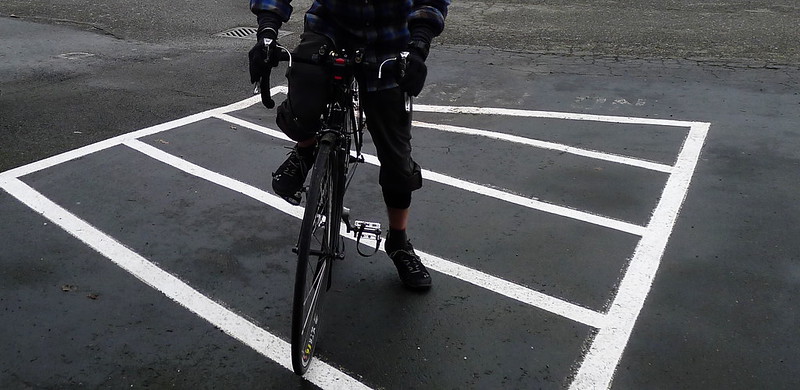
I’ve worn my pair on every commute for the past three months and can report that they do exactly what they claim to do. Temperatures this winter have been anywhere between 30° and 45° Fahrenheit and raining more often than not. Throughout it all the Duragloves have kept me warm and comfortable, even when wet, and I’ve never felt the desire to take them off to cool down. The thinness of the glove means that very little dexterity is lost. I do not need to remove the gloves to manipulate objects with my hands. I’ve had them for too short a time to comment on durability – and, until a crash, riding a bike tends to not be very demanding of a glove’s durability – but given the blend of wool and synthetic materials, I’m confident that the gloves will fully satisfy my demands in that department.
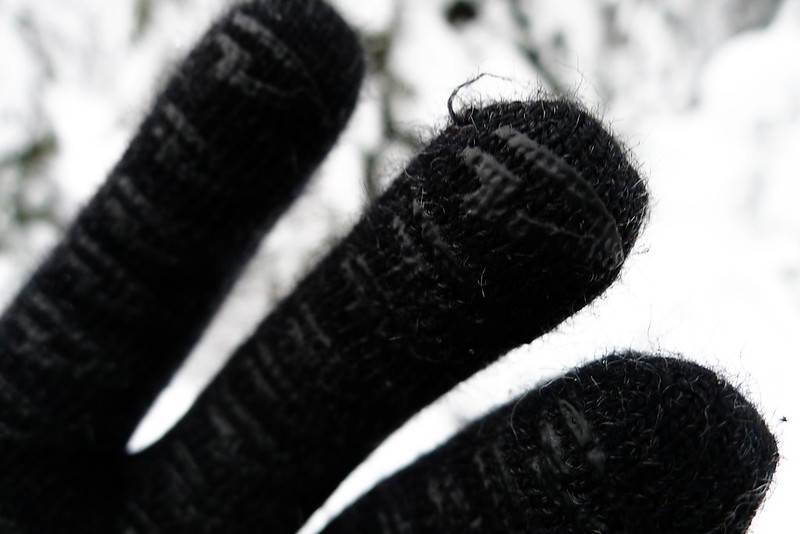
I have tried using the gloves on backcountry trips. I still prefer the Outdoor Research gloves for that application. Walking does not consistently get my heart-rate up to the extent that riding a bike does, and the Duragloves are simply not warm enough to keep my hands comfortable during that activity. Used as a liner with an insulated mitten I’m sure they would be adequate, but I prefer to use a thicker glove with an uninsulated shell mitten.
My only complaint concerning the Duragloves are the rubber grippy things. They could be grippier. When wearing the gloves it is difficult for me to twist the bezel of my Fenix LD20 headlights to adjust their mode. This is not the case on a more general-purpose glove, such as Mechanix gloves or Kuiu Guide Gloves. Even the grippy things on my Outdoor Research PL 400 gloves, despite having been worn down for years, do a better job adjusting the lights.
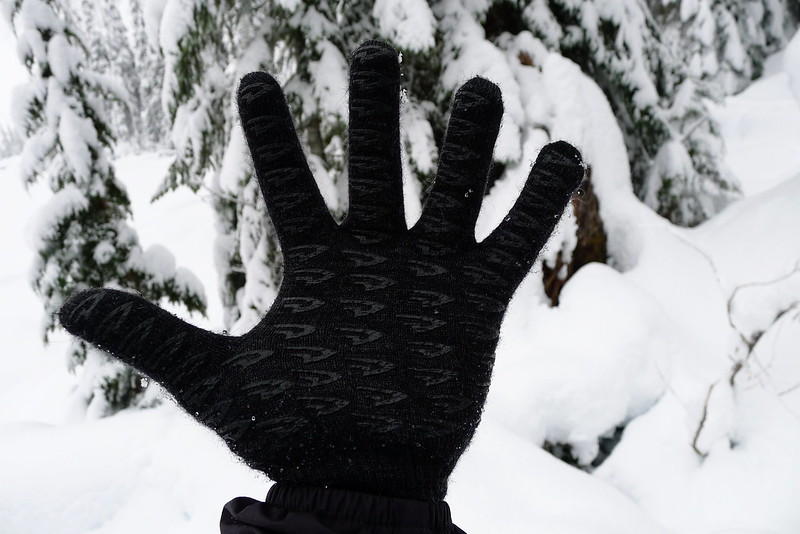
I can work around the lack of grip (adjusting the lights is the only application where this has come up) and everything else about the gloves is close to perfect. They are an affordable, American-made glove intended for aerobic activity in cool conditions. If you’re looking for a glove in that department, the Duragloves are well worth your consideration.